
Trust is built through consistency — the experience of encountering an organization and finding it to be exactly what it presented itself to be, over and over again.
When a church, nonprofit, or faith-based business struggles to communicate — when people don't quite get what the organization does, or who it's for, or why it matters — the problem is often not a messaging problem. It's a branding problem.
Strong branding is the infrastructure that makes clear communication possible. It's the system that ensures the right message reaches the right people in a way they can receive, trust, and act upon.
This guide is for leaders and communicators at churches, nonprofits, and mission-driven businesses who want their organization’s message to land with more clarity.
Why Mission-Driven Organizations Struggle to Communicate
There's a particular tension that faith-based and mission-driven organizations often face: the work is deeply meaningful, but the communication of it feels either too insider-focused or too generic to land with the people it needs to reach.
The insider version sounds like: "We're a Spirit-led community pursuing Kingdom transformation through relational discipleship." Powerful to the people who already belong. Opaque to everyone else.
The generic version sounds like: "We help people live better lives." Safe, inoffensive, and indistinguishable from hundreds of other organizations.
Neither version does the work. Both are symptoms of branding that hasn't been clearly defined.
What Branding Has to Do With Communication
Branding is often thought of in purely visual terms — the logo, the colors, the fonts — those things matter. But at its core, a brand is a communication system. It's the set of decisions — visual and verbal — that determine how an organization presents itself, what it says, and how it says it.
When that system is well-designed, communication becomes clearer by default:
The visual identity signals the kind of organization this is before a word is read
The brand voice ensures that every piece of copy — from a social post to a donor letter to a website homepage — sounds like it comes from the same place
The messaging framework gives staff, volunteers, and partners the language they need to talk about the organization consistently
The visual system ensures that every touchpoint — print, digital, social, environmental — reinforces the same identity
Without this system, communication is improvised. Every email, post, and brochure is a small reinvention — and over time, the inconsistency accumulates into confusion.
The Three Communication Problems Branding Solves
1. The Recognition Problem
If people can't recognize your organization across different channels and contexts, they can't build a relationship with it. A church that looks one way on Instagram, another way in the bulletin, and another way on the website isn't building brand recognition — it's starting from zero with every impression.
Strong branding creates visual and verbal consistency that compounds over time. Each touchpoint reinforces the last. Recognition builds. Trust follows.
2. The Differentiation Problem
In almost every city, there are multiple churches, multiple nonprofits serving similar populations, and multiple faith-based businesses in similar categories. Most of them look and sound generically similar.
Strong branding answers the question: why you, specifically? Not in a marketing-speak way, but in a genuine, honest way that reflects what makes your organization actually different — your convictions, your approach, your people, your specific corner of the mission.
Organizations that can answer this question clearly attract the people who are right for them. Organizations that can't attract nobody in particular.
3. The Trust Problem
For faith-based and mission-driven organizations, trust is everything. People give to organizations they trust. They attend communities they trust. They partner with businesses they trust.
Trust is built through consistency — the experience of encountering an organization and finding it to be exactly what it presented itself to be, over and over again. Branding is the system that makes that consistency possible.
An organization that looks polished and professional, communicates with a clear and consistent voice, and shows up with the same identity across every context is signaling something fundamental: we are who we say we are. That signal builds trust in ways that no single piece of communication can on its own.
What Clearer Communication Actually Looks Like
When branding and communication are working well together, a few things become noticeably true:
New people get it faster. Someone encountering your organization for the first time understands what you are, who you serve, and what's possible through a relationship with you — within seconds of landing on your website or picking up your brochure.
The existing community is better equipped to share. Members, donors, and volunteers can explain the organization in their own words because the core message is clear enough to have actually landed. Word-of-mouth grows.
Staff and leadership spend less time on communications. When the brand voice and messaging framework are clear, producing new communications is faster and requires less oversight. The decisions are already made.
Donors and partners respond with more confidence. A clearly branded organization signals organizational maturity. It communicates that the people running it are thoughtful stewards of the resources entrusted to them.
A Starting Point for Organizations Ready to Communicate Clearly
If you're sensing that your organization's communication could be sharper, here's a useful diagnostic:
Ask three staff members or volunteers to describe what your organization does in two sentences. If you get three meaningfully different answers, you have a messaging problem — and likely a branding problem underneath it.
Here are a few starting steps that tend to create clarity quickly:
Write a one-sentence definition. What do you do, who is it for, and what outcome do you create?
Name your primary audience. Choose the group you most need to reach first, and write to them.
Define your voice in 3 words. Pick three traits (and three “avoid” traits) so every writer can stay consistent.
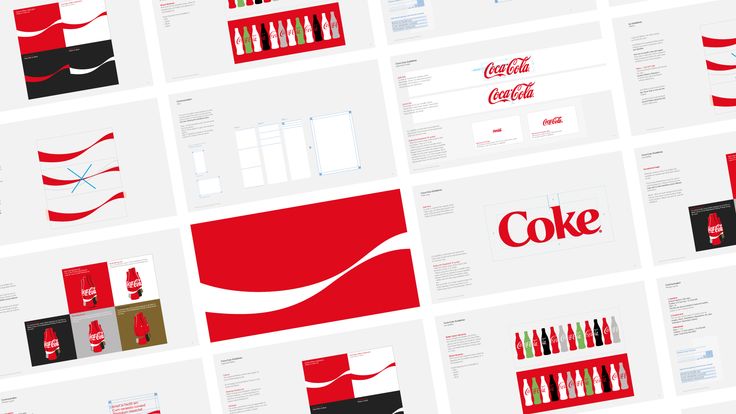
Build a basic visual + messaging system. Logo usage, type, color, and a simple messaging framework that your team can repeat.
The work of clarifying your brand begins with clarifying your identity: who you are, who you're for, and what you believe that others don't. From that foundation, the visual and verbal systems that carry your message can be built.
Communicating clearly is not a marketing strategy. It's a form of respect — for your audience, your mission, and the work you're doing in the world.
Horsfall Design Co. helps mission-driven organizations build brands that communicate with clarity, consistency, and conviction. Book a fit-check call to talk about where to start.
Check out our FAQ for some answers to common questions or ask us directly via our contact page!
Feature image: Brand identity for Christ Our Savior Lutheran Church, designed by Samuel Novak.

Let’s keep in touch.
Discover more about high-performance web design. Follow us on Twitter and Instagram.