
The images you use across your website, social media, print materials, and presentations are one of the most powerful expressions of your brand. They communicate tone, personality, values, and culture in ways that logos and color palettes alone cannot. And when they're inconsistent — mismatched in quality, mood, or subject — they undermine everything else in your visual system.
Most organizations think of photography as content. Capture an event, post the photos, move on. But for organizations building a coherent visual identity, photography isn't content — it's infrastructure.
The images you use across your website, social media, print materials, and presentations are one of the most powerful expressions of your brand. They communicate tone, personality, values, and culture in ways that logos and color palettes alone cannot. And when they're inconsistent — mismatched in quality, mood, or subject — they undermine everything else in your visual system.
This is why brand photography belongs inside your visual identity system, not outside it.
The Gap Between Logos and Reality
Organizations spend significant time and money on logos, color palettes, and typography. They produce brand guidelines. They update their website. And then they populate that carefully designed system with whatever photos happen to be available — stock images, event snapshots, and headshots taken on someone's phone three years ago.
The result is a brand that looks polished in theory and patchwork in practice.
Visitors to your website don't see your brand guidelines. They see your photos. Those images are doing one of two things: reinforcing the brand identity you've worked to build, or quietly contradicting it.
What Makes Photography "On-Brand"
Brand-aligned photography is defined less by technical quality (though that matters) and more by intentional coherence with the rest of your visual identity. Specifically:
Mood and Tone
Every brand has an emotional register. Warm and approachable. Clean and authoritative. Rugged and honest. Refined and timeless. Your photography should inhabit that same register. A brand built around calm authority shouldn't use photos that feel chaotic or highly energetic. A brand built around community warmth shouldn't feel cold or clinical.
Before a photoshoot, it's worth asking: what is the emotional experience we want viewers to have when they see our images? That answer should guide every creative decision — location, lighting, subject, styling, and editing.
Subject Matter
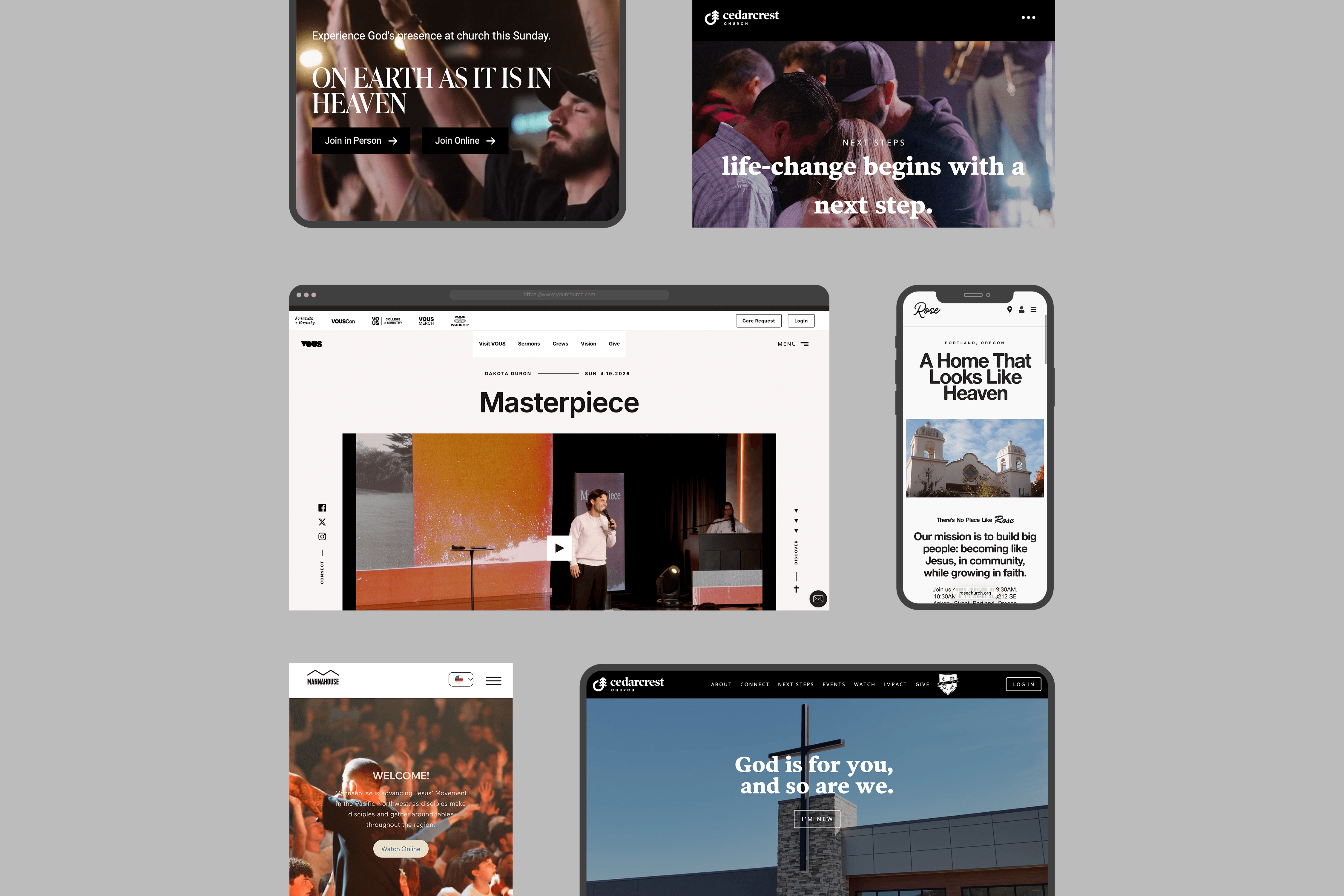
What — and who — appears in your photos communicates what your organization values. For a faith-based organization, photos of real people in authentic community moments communicate something that stock photography of generic office workers never will. For a premium craft brand, close-ups of materials, tools, and finished goods communicate a commitment to quality that lifestyle shots alone can't convey.
Think carefully about what your photography features, not just how it looks.
Editing Style
The way photos are edited — color temperature, contrast, saturation, grain — is part of your visual language. A consistent editing style across your image library creates cohesion even when the subjects and settings vary. An inconsistent editing style creates visual noise, even if each individual photo is well-composed.
For organizations managing photography across multiple photographers or sources, a defined editing direction (or a set of Lightroom presets) is one of the most efficient ways to maintain visual consistency.
Diversity of Shot Types
A visual identity system needs photography at multiple scales: wide environmental shots that establish context, medium shots of people in interaction, and close detail shots that communicate texture and craft. Each serves a different role across different applications — hero images, social posts, pull quotes, product pages, email headers.
A photoshoot planned without this framework often delivers a library heavy in one type and thin in others.
Why Stock Photography Underperforms
Stock photography is a useful stopgap. It's not a brand asset.
The problem with stock images isn't quality — many stock photos are technically excellent. The problem is ownership and specificity. Stock photos were taken for no one in particular, which means they communicate nothing specific about your organization. They're placeholders that signal, subtly but persistently, that you haven't invested in showing your audience who you actually are.
For organizations whose trust and credibility are core to their mission — churches, nonprofits, service businesses, faith-based brands — authentic imagery of real people, real spaces, and real work is significantly more persuasive than even the best stock alternative.
Integrating Photography Into Your Brand System
Treating photography as part of your visual identity system means making it a deliberate, documented, recurring investment rather than an ad hoc production.
In practice, this looks like:
A defined photography direction in your brand guidelines: mood, subject, editing style, shot type priorities
A planned annual photoshoot (or seasonal, for organizations with high visual content needs) rather than reactive one-off shoots
A centralized asset library where approved brand images live, accessible to everyone producing content
A refresh cadence — knowing when images are due for an update because they no longer reflect the current team, space, or brand direction
The Practical Impact
When brand photography is integrated into your visual identity system, the effects are concrete:
Website pages feel coherent and polished, not assembled
Social content is easier and faster to produce because you have a library of on-brand images to draw from
Printed materials — brochures, programs, direct mail — carry the same visual weight as your digital presence
New audience members encounter a brand that feels established and trustworthy, not improvised
For organizations in early stages of building a brand, photography is often the highest-impact investment after the core identity elements. For organizations with an established identity, it's often where brand coherence breaks down first.
Either way, it belongs in the system.
At Horsfall Design Co., we integrate photography direction into every visual identity project we build. Book a fit-check call to talk about what your brand needs in order to look like the organization it actually is.
Check out our FAQ for some answers to common questions or ask us directly via our contact page!

Let’s keep in touch.
Discover more about high-performance web design. Follow us on Twitter and Instagram.